The uncomfortable truth about why you still crave what you craved at seven years old.
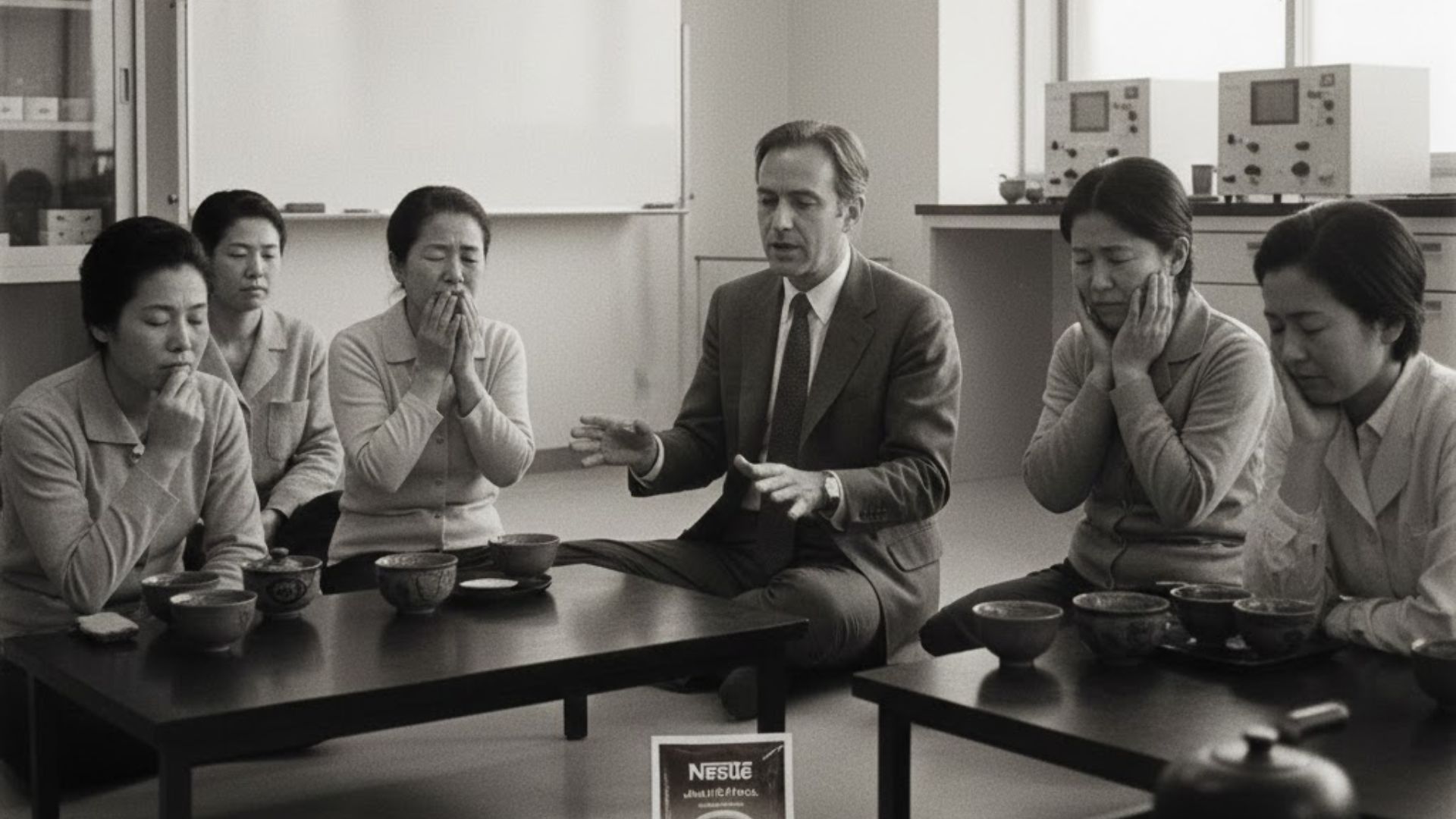
It’s 1975. You’re not born yet, but somewhere in a Tokyo research lab, a French psychoanalyst named Clotaire Rapaille is conducting an experiment that will change how corporations think about your brain.
Nestlé hired him to solve a problem: Japanese people won’t drink coffee. They’ve tried everything. Lower prices. Better advertising. Celebrity endorsements. Nothing works. The Japanese love tea. They’ve loved tea for thousands of years. Coffee tastes bitter, foreign, wrong.
So Rapaille does something unusual. He asks Japanese adults to lie on the floor, close their eyes, and describe their earliest memory of tea.
The room fills with emotion. People cry. They talk about their grandmother’s hands. The smell of morning. Family gatherings. Warmth. Safety. Home.
Then he asks them about coffee.
Silence.
No memories. No emotion. Nothing. Coffee wasn’t part of their childhood, so it’s not part of their identity. And here’s what Rapaille discovered that changed everything:
You can’t sell an adult something they have no childhood memory of.
But you can give that memory to their children.
So Nestlé stopped trying to convert adults. They flooded Japan with coffee-flavored candies. Not coffee. Just the taste. Just enough to create familiarity in developing brains. They waited ten years. A whole decade.
And when those candy-loving kids grew up and needed caffeine for their first corporate jobs? They didn’t see coffee as foreign anymore. They saw it as familiar. As theirs.
Today, Japan is the world’s third-largest coffee importer. Nestlé owns 73% of the instant coffee market.
That’s not marketing. That’s neuroscience wrapped in capitalism.
Now. Let me tell you what this has to do with you and that yellow packet in your kitchen.
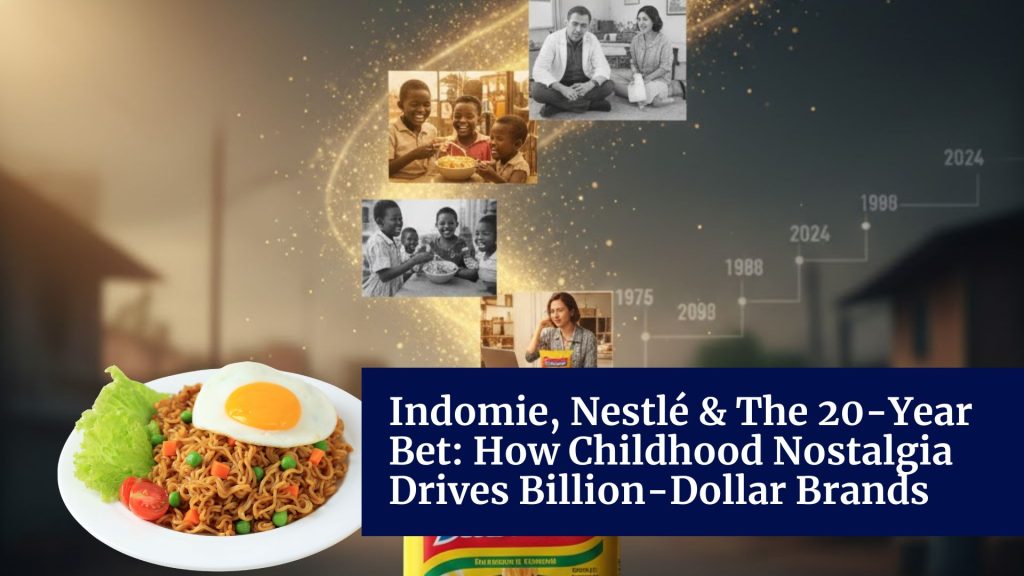
1988: TWO SINGAPOREAN BROTHERS BET ON YOUR TASTE BUDS
The same year Nigerians were celebrating the annulment of Babangida’s debt, two brothers—Haresh and Sajen Aswani—arrived in Lagos with two shipping containers full of something Nigerians had never eaten before.
Noodles.
Not just any noodles. Instant noodles. The kind you could cook in three minutes by boiling water. Revolutionary for women who spent hours every day pounding yam and grinding pepper. But completely alien to a population that had been eating rice, beans, and fufu for generations.
Everyone said they were insane. “Nigerians don’t eat noodles.” “This will never work.” “Go back to Singapore.”
But Tolaram wasn’t trying to sell to the people saying those things.
They were targeting you. Five-year-old you. Seven-year-old you. The version of you that didn’t have fixed food opinions yet. The version whose brain was still soft clay, ready to be molded.
And they had a playbook. The same one Nestlé used in Japan.
STEP ONE: MAKE THE CHILDREN BEG FOR IT
Here’s what most people misunderstand about Indomie’s early strategy. They think Tolaram succeeded because the product was cheap and convenient.
Wrong.
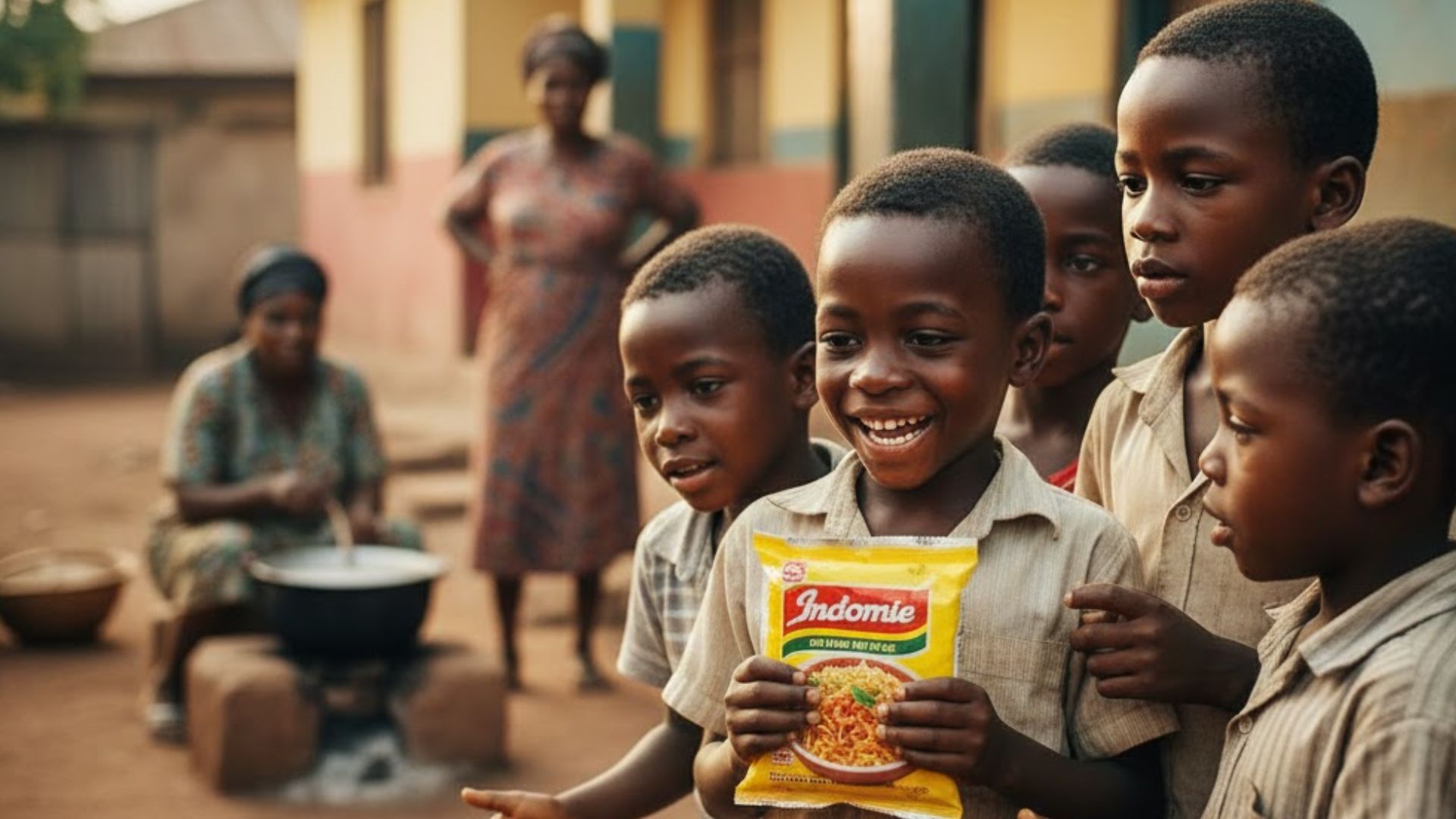
In the late 80s and early 90s, Indomie was expensive. A luxury. Only upper-middle-class and wealthy families could afford it regularly. And that wasn’t a bug in the strategy—that was the entire point.
Because here’s what happens when something is expensive and children see other children having it:
They beg.
“Mommy, everyone at school has Indomie. Why can’t I have it?” “Just once. Please. I’ll be good.” “Tunde’s mom bought it for him!”
And Nigerian parents, like parents everywhere, have a weakness: they want their children to have what other children have. They want their children to feel included. To belong.
So even middle-class families who couldn’t really afford it would buy it. Once in a while. For special occasions. As a treat. And every time that child got Indomie, a memory was being encoded.
The bright yellow packaging. The smell of chicken seasoning filling the kitchen. The satisfaction of slurping noodles from a bowl. The feeling of finally getting the thing everyone else had.
That memory would sit in that child’s brain for thirty years.
Waiting.
STEP TWO: THE COMMERCIALS WEREN’T SELLING FOOD. THEY WERE SELLING BELONGING.
Go back and watch those old Indomie commercials from the 90s. Notice something?
It’s never just one child eating alone. It’s always groups. Kids laughing together. Playing together. Eating together. The subtext is clear: Indomie is what happy, social, normal kids eat.

The psychological mechanism at work here is brutal in its effectiveness. Children don’t just want things because they taste good. They want things because those things signal membership in a tribe. Indomie wasn’t food—it was a cultural password. The thing that made you part of the group.
If you didn’t have Indomie, you were outside. If you did? You were in.
And once you’re in, you never really leave.
STEP THREE: WAIT. JUST WAIT.
This is where most brands fail. They want results now. This quarter. This year. They measure success in immediate revenue.
Tolaram measured success in decades.
They lost money for twenty years. Twenty. Years.
But they kept going. They built factories. Seventeen of them. They hired 20,000 people. They created a distribution network of 2,000 trucks so that whether you were in Victoria Island or a village in Sokoto, you could find Indomie.
And slowly, as the years passed, the price dropped. What was once a luxury became accessible to middle-class families. Then lower-middle-class. Then even low-income families could occasionally buy it.
But here’s the key: the kids who first fell in love with Indomie when it was expensive never forgot that feeling.
Even as it became common, it remained special. Because memories don’t update with market pricing.
THE PAYOFF: YOU’RE 35 NOW, AND YOU STILL WANT IT
Let’s do some math that’ll make you uncomfortable.
If you were born in 1985, you’re 39 now. You probably first tasted Indomie around 1990 or 1991, when you were five or six. Old enough to remember. Young enough for it to imprint.
If you were born in 1990, you’re 34. You grew up with Indomie as a constant presence. It was there when you were in primary school. In secondary school. In university, surviving on ₦50 packets during exam periods.
Every stage of your development, Indomie was there. Silently becoming part of your identity.
And now? Now you’re an adult. You’re stressed from work. You’re tired. You open your kitchen cupboard, and there it is—that yellow packet. And before you even consciously think about it, you’re already reaching for it.
Because it’s not about hunger anymore.
It’s about the memory of being seven years old, sitting at your mother’s dining table, feeling safe and happy and full.
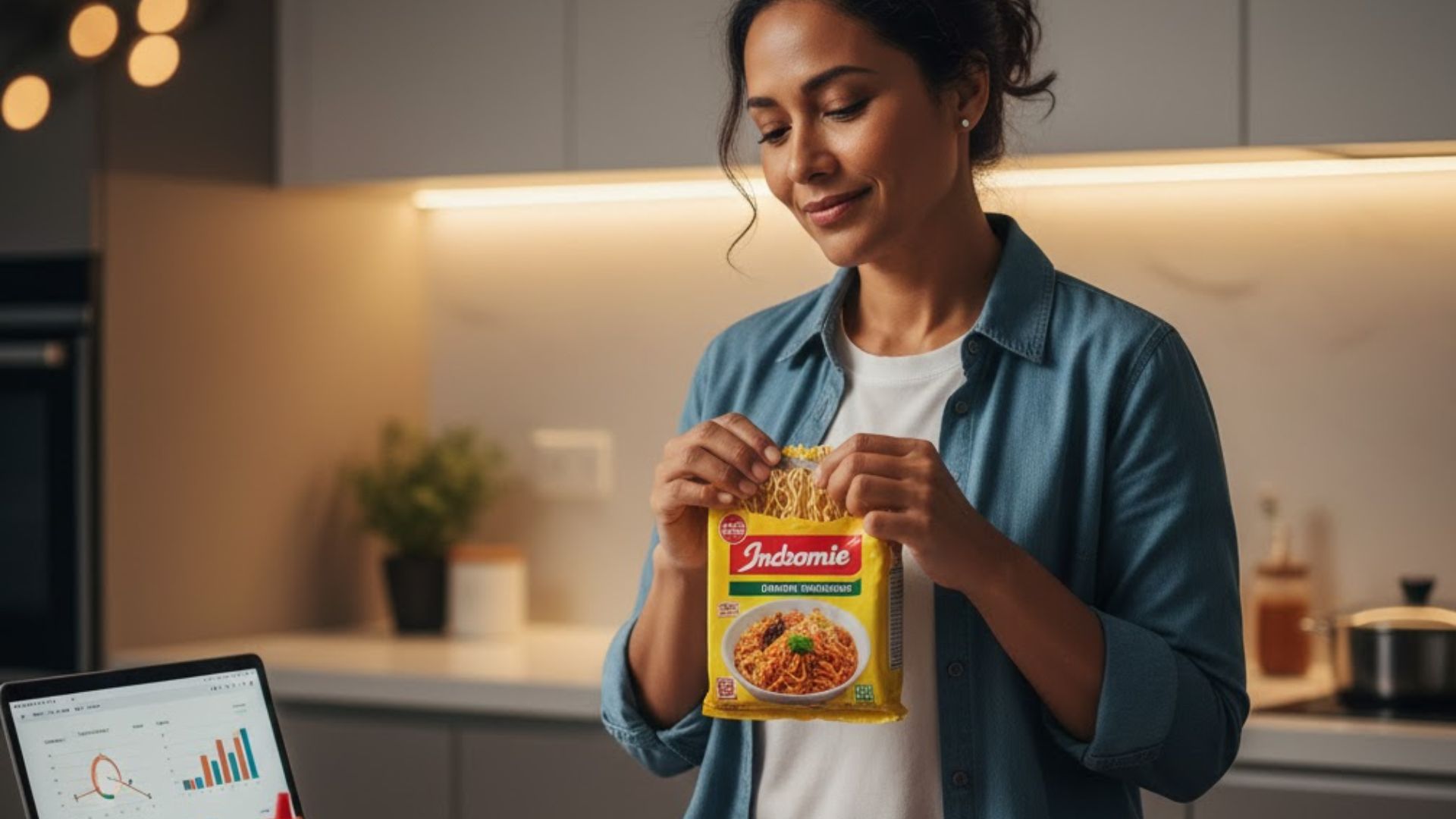
Tolaram didn’t just sell you noodles. They sold you that feeling. And they’re still selling it to you today.
THE NUMBERS DON’T LIE: YOU’RE NOT ALONE
Today, Indomie controls 74% of Nigeria’s instant noodles market. Let that sink in. Three out of every four packets of noodles sold in this country are Indomie.
Nigerians consume over 1 million packets per day. That’s 365 million packets per year. From a single brand.
The company generates over $700 million annually. But more telling than the money? The culture.
When Nigerians say “noodles,” we don’t mean the category. We mean Indomie. It’s in our music. Our memes. Our everyday language. “Let me just make Indomie” is a complete sentence that everyone understands.
Competitors have tried to break in. Minimie. Honeywell. Dangote. Big companies with deep pockets and aggressive marketing. Some have carved out small market shares.
But they can’t compete with your memories.
THE UNCOMFORTABLE QUESTION: ARE YOUR CHOICES REALLY YOURS?
Here’s where this gets philosophical.
You think you like Indomie because it tastes good. Because it’s convenient. Because it’s affordable. And sure, those things are true.
But is that really why you buy it?
Or do you buy it because a company successfully implanted a preference in your brain when you were seven years old, and that preference has been reinforcing itself every time you’ve eaten it for the past three decades?
When you feed Indomie to your own children now, are you doing it because it’s the best option? Or because you’re unconsciously passing down the brand loyalty that was passed down to you?
This isn’t a criticism. It’s an observation.
We like to think we’re making rational, independent choices. But most of our preferences were formed before we could even spell the word “preference.”
And companies know this. They’ve always known this.
WHAT THIS MEANS FOR ANYONE TRYING TO BUILD SOMETHING THAT LASTS
If you’re building a brand, a movement, or a mission, there’s a brutal truth you need to accept:
The battles that matter most aren’t won in a year. They’re won in a generation.
Tolaram didn’t try to convince adults to abandon jollof rice for noodles. They didn’t waste energy fighting cultural inertia. Instead, they targeted the generation that had no food inertia yet. The children.
And they waited. Patiently. For twenty years.
Most founders can’t think like this. Most organizations can’t operate like this. Because boards want quarterly results. Investors want growth now. Donors want immediate impact metrics.
But the brands that truly change behavior? The movements that genuinely shift culture? They understand that you’re not building for today’s adults. You’re building for today’s children who will become tomorrow’s adults.
You’re not creating customers. You’re engineering nostalgia.
THE DISTURBING TRUTH ABOUT LEGACY
So yes. Your childhood was a marketing experiment.
That feeling of “home” you get from certain foods, certain brands, certain experiences? Someone engineered that feeling. Deliberately. Systematically. With full knowledge of how human memory works and how childhood experiences shape adult behavior.
And it worked.
You’re proof that it worked.
Every time you buy Indomie instead of the cheaper competitor sitting right next to it on the shelf, you’re proof. Every time you recommend it without thinking. Every time you feel that warm nostalgia when you smell chicken seasoning.
You’re living evidence of one of capitalism’s most effective strategies: implant the preference early, harvest the loyalty forever.
But here’s the thing.
Understanding this doesn’t make you immune to it. You’ll probably still buy Indomie next week. And the week after that. Because knowing you were conditioned doesn’t erase the conditioning. The memory is still there. The emotional bond is still real.
Even if it was manufactured.
SO WHAT NOW?
If you’re building something—whether it’s a brand, an NGO, a social enterprise, a movement—you have a choice.
You can chase today’s adults with aggressive marketing and wonder why your message doesn’t stick. Why people nod but don’t change. Why behavior remains stubbornly unchanged despite your best efforts.
Or you can do what Tolaram did. What Nestlé did. What every enduring brand has done.
Target the future.
Speak to the people who haven’t formed their opinions yet. The students who will become professionals. The children who will become parents. The early adopters who will become evangelists.
Give them an experience they’ll remember thirty years from now. Create the memory that becomes the preference. Build the nostalgia that becomes the loyalty.
It takes longer. It requires patience that most organizations don’t have. It demands faith that the seeds you’re planting today will become forests you might not live to see.
But if you want to build something that truly lasts? Something that shapes culture instead of just participating in it?
That’s the price.
Twenty years. One generation. Millions of small moments that accumulate into identity.
That’s how you win.
Not by changing minds. But by shaping them before they’re fully formed.
THE FINAL QUESTION
So here’s what I want you to think about as you close this tab and go about your day:
What else in your life did someone else choose for you before you were old enough to choose for yourself?
And more importantly:
What are you choosing for the next generation?
Because someone is always planting seeds. The only question is: whose seeds are they, and what will they grow into?
Think about that the next time you reach for that yellow packet.
Furst Spark helps organizations build legacies, not just campaigns. Because the stories that matter aren’t told in quarters—they’re told in generations. Let’s build yours. Get in touch