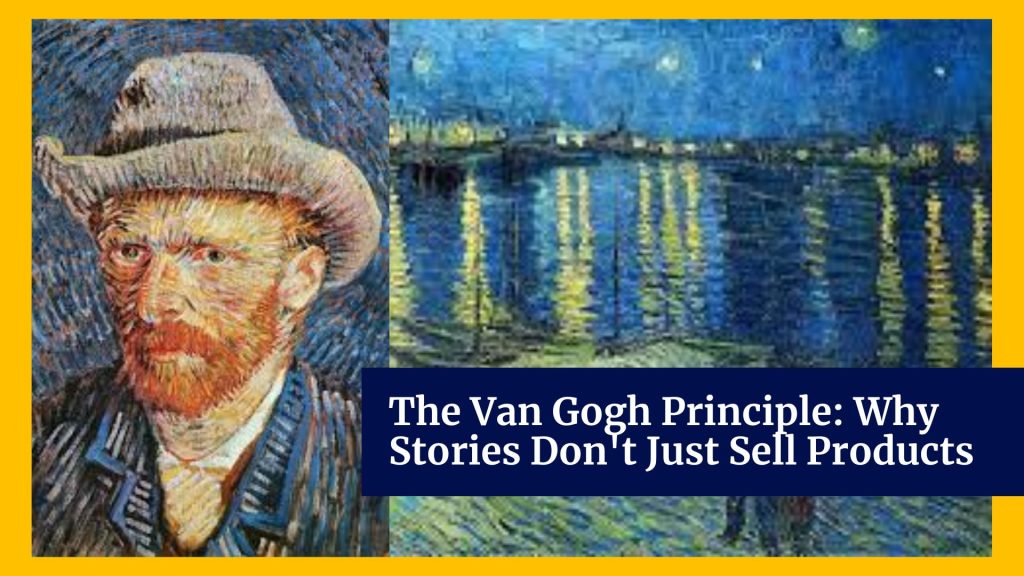
He writes to his brother Theo that night: “I am working with the gusto of a Marseillais eating bouillabaisse, which won’t surprise you when it’s a question of painting large sunflowers… If I carry out this idea, there will be a dozen panels. The whole thing will therefore be a symphony in blue and yellow.”
A symphony in blue and yellow. A revolution in pigment and passion.
The world yawned.
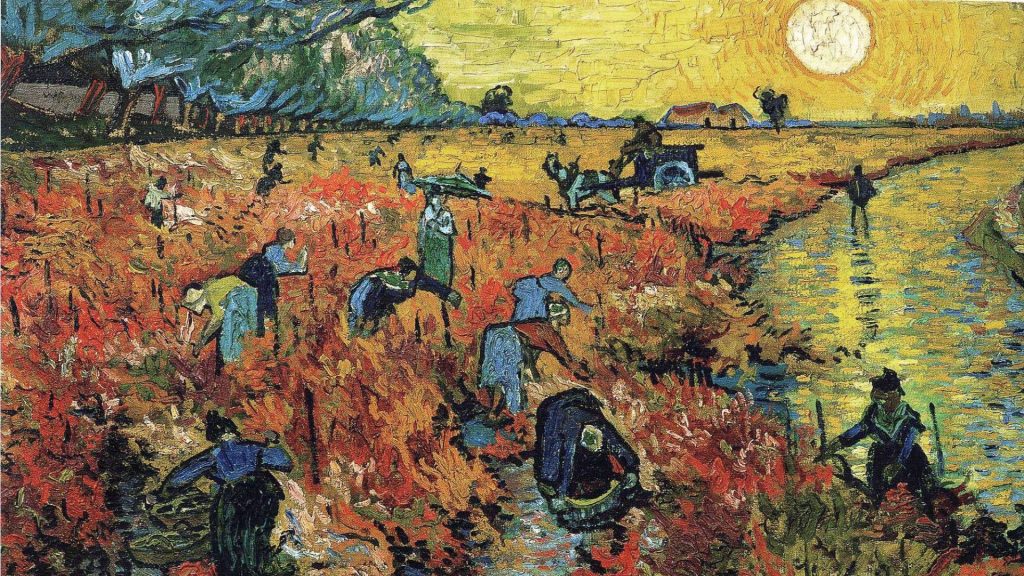
Vincent sold exactly one painting during his lifetime—”The Red Vineyard”—for 400 francs, roughly $1,000 in today’s money. He died believing himself a failure, a burden on his brother, a madman who painted while the world looked away.
In 2017, his “Laboureur dans un champ” sold for $81.3 million.
The painting didn’t change. The brushstrokes remained exactly as Vincent left them, thick with impasto, screaming with color. What changed was the story. What transformed was how we learned to feel about the man who mixed desperation with paint and created doorways into worlds we’d never noticed before.
This is not a story about art appreciation.
This is a story about the terrifying, magnificent truth that value lives in the narrative, not the canvas.
When Stories Become Oxygen
Here’s what they don’t teach you in business school: people don’t buy products. They buy the feeling of becoming someone new. They buy the story they’ll tell themselves about who they are when they use your product, support your cause, or align with your mission.
You already know this, somewhere deep in your bones. You’ve felt it.
Think about the last time you bought something that cost more than it should have. Not because you’re foolish with money, but because something about it meant something. Maybe it was a handwoven basket from a women’s cooperative, and the label told you about Amina, who learned the craft from her grandmother and now sends three children to school with her earnings. You didn’t just buy a basket. You bought a thread in Amina’s story. You bought the feeling of being someone who cares, who contributes, who sees beyond the transaction.
That feeling? That’s the Van Gogh Principle at work.
And Nigerian brands—particularly the ones changing lives, not just making profits—have mastered this in ways that would make Vincent weep with recognition.
The Chessboard in the Slum
Lagos, 2018. Tunde Onakoya walks into Ikorodu, one of Lagos’s most overlooked communities, carrying a chessboard under his arm. Not medicine. Not food parcels. Not another well-meaning pamphlet about escaping poverty.
A chessboard.

To the casual observer, it seemed almost insulting. Children here were fighting battles with hunger, not bishops and knights. What could a game possibly offer?
But Tunde understood something profound: poverty isn’t just about lacking resources—it’s about lacking a story that says you matter.
Chess in Slums Africa didn’t just teach children chess moves. They taught children that their minds were powerful, that strategy and patience could change outcomes, that a kid from Ikorodu could sit across from anyone in the world and compete as an equal. They transformed pawns on a board into metaphors for life—you start at the bottom, but with the right moves, you can become a queen.
The story wasn’t “we’re helping poor kids.” The story was “we’re revealing champions who were always there.”
When Tunde broke the Guinness World Record for the longest chess marathon in 2024—playing for 60 hours straight in Times Square, New York—he raised over $150,000 for the cause. But more importantly, he gave every child in that program a new story about themselves. He gave parents a reason to believe. He gave donors something more valuable than a tax receipt—he gave them a role in a narrative of transformation.
That’s the Van Gogh Principle. The chess pieces didn’t change. The story about what they meant changed everything.
The Piggy That Roared
Before 2016, saving money in Nigeria felt like punishment. Banks made it complicated. Interest rates were jokes. The process felt designed to make you feel small and stupid for even trying.
Then three young Nigerians—Odunayo, Joshua, and Somto—built PiggyVest with a simple story: What if saving money felt like a game you were winning?

They didn’t invent savings. They reinvented the story around it.
PiggyVest could have positioned themselves as “another fintech app with competitive interest rates.” Boring. Forgettable. Lost in a sea of startups promising digital disruption.
Instead, they built a narrative around your future self. They made saving feel like an act of self-love, a quiet revolution against the instant-gratification culture. Their social media didn’t just show numbers growing in accounts—it showed dreams becoming possible. A Lagos girl buying her first laptop. A young man finally affording that professional course. A couple saving for their wedding without family drama.
The app became a character in people’s life stories—the wise friend who helped them become disciplined, the silent partner in their glow-up journey. Users didn’t just save money through PiggyVest; they became “PiggyVest people”—disciplined, forward-thinking, on their way to something better.
By 2023, they had over 4 million users and had helped Nigerians save over ₦1 trillion.
The technology was simple. The story was revolutionary.
The Blood That Tells Stories
Temie Giwa-Tubosun should have been satisfied with her degree from a prestigious American university and a comfortable career path. Instead, she kept thinking about the women.

The Nigerian women bleeding to death during childbirth because hospitals ran out of blood. The mothers who didn’t have to die but did anyway because the system treated their lives as inevitable casualties rather than preventable tragedies.
In 2016, she founded LifeBank.
But here’s where most people misunderstand what LifeBank does. Yes, they deliver blood, oxygen, and medical supplies to hospitals. Yes, they’ve saved thousands of lives through technology and logistics. But their real genius—their Van Gogh moment—was understanding that they weren’t in the delivery business.
They were in the rewriting reality business.
LifeBank’s story transformed blood banks from bureaucratic nightmares into urgent rescue missions. They gave every donation a face, a name, a mother who lived because someone said yes. They turned logistics into life-saving theater—every delivery tracked in real-time, every minute counted, every arrival celebrated like the miracle it was.
Temie positioned blood donors as heroes in a very real, very urgent story. Not abstract charity. Not vague goodwill. Actual, documented, “this person is alive because of you” heroism.
When LifeBank secured funding and partnerships, investors weren’t just betting on a logistics platform. They were buying into a story about Nigeria where mothers don’t die from preventable causes, where technology serves humanity’s most desperate needs, where the girl from Sabo-Yaba grows up to save thousands of lives.
The blood supply chain existed before LifeBank. The story about what that supply chain meant—that’s what Temie created.
The Story You Haven’t Told Yet
Right now, you’re sitting on a Van Gogh.
Your NGO, your startup, your mission—it’s not just another organization. It’s a symphony in blue and yellow that the world hasn’t learned to hear yet. It’s a revolution in brushstrokes that people are walking past because you haven’t shown them how to feel it.
You have the programs. You have the impact. You probably even have the numbers—lives changed, communities transformed, problems solved.
But do you have the story that makes people cry in the middle of scrolling Instagram? Do you have the narrative that makes a busy executive stop, stare at your pitch deck, and feel something shift in their chest? Do you have the words that make a potential partner think, “I don’t just want to fund this—I want to be part of this“?
Because here’s the brutal truth: impact without story is a tree falling in an empty forest. It matters. It’s real. It’s changing lives.
But if no one feels it, no one funds it. If no one understands it, no one champions it. If no one believes in it emotionally, your mission stays small no matter how large your vision is.
The Transformation in the Telling
Vincent van Gogh’s letters to Theo reveal a man who saw the divine in everything—in peasant boots, in wheat fields, in the twisted branches of olive trees. He didn’t just paint objects. He painted the feeling of being alive in a world on fire with meaning.
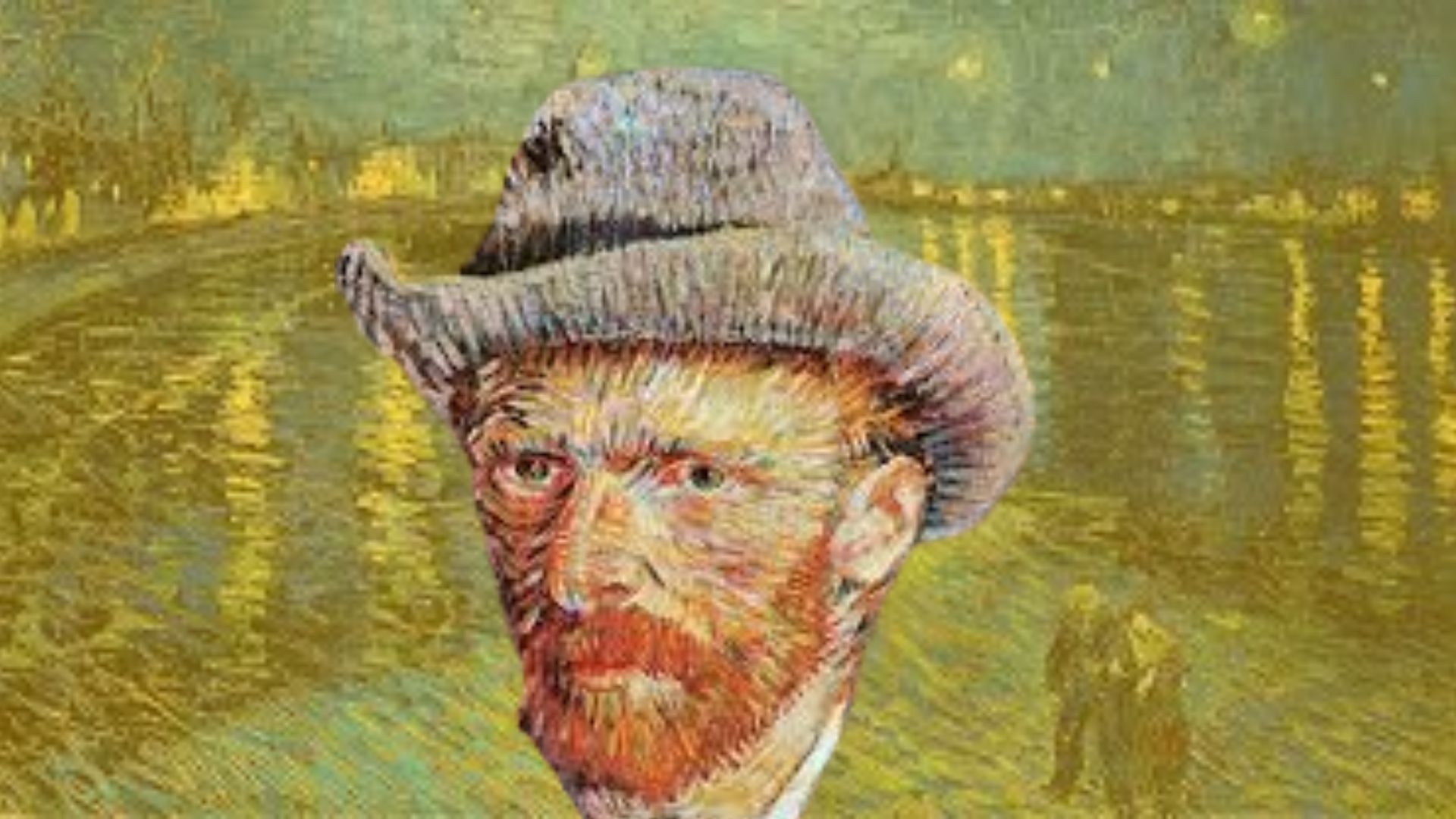
When those letters were published, when his biography became known, people finally understood: this wasn’t just paint on canvas. This was a man who burned himself up trying to show the rest of us how to see. The story transformed the art from “weird” to “masterpiece.”
Your work needs that same transformation.
Not because your impact isn’t real—but because real impact without the right story is invisible to the people who need to see it, fund it, share it, and believe in it.
Chess in Slums didn’t just help kids learn chess—they showed the world that genius lives everywhere, even in the places we’ve been taught to overlook.
PiggyVest didn’t just build a savings app—they rewrote the story about young Nigerians from “financially irresponsible” to “building their futures with intention.”
LifeBank didn’t just deliver blood—they created a narrative where every Nigerian life is urgent, valuable, and worth moving heaven and earth to save.
These brands transformed their reality by transforming their story.
And that’s not marketing. That’s modern-day alchemy.
The Canvas Awaits
Vincent died believing his life’s work was worthless. His brother Theo knew differently, but Theo died just months after Vincent. It was Theo’s widow, Johanna, who spent decades tirelessly promoting Vincent’s work, publishing his letters, crafting the narrative of the tortured genius who saw beauty where others saw only madness.
Johanna understood: the art was brilliant, but without the story, the world would never stop long enough to see it.
You need your Johanna. You need someone who understands that your organization isn’t just delivering services or running programs—you’re conducting a symphony in blue and yellow that could change how people see the world.
That’s where Furst Spark comes in.
We don’t just write content. We don’t just craft messaging. We excavate the stories buried in your mission and polish them until they catch the light. We find the human heartbeat inside your impact data. We translate your vision into the kind of narrative that makes people stop scrolling, start caring, and finally feel why your work matters.
Because the Van Gogh Principle isn’t just a nice metaphor.
It’s the difference between struggling in obscurity and commanding the attention, funding, and partnership your mission deserves.
The painting is already brilliant.
Let’s make sure the world knows how to see it.
Furst Spark: Where impact meets the stories that make people believe. Ready to transform how the world sees your work? Let’s talk.