The Night Before Everything Changed
Chinedu’s hands were shaking, but not from nerves.
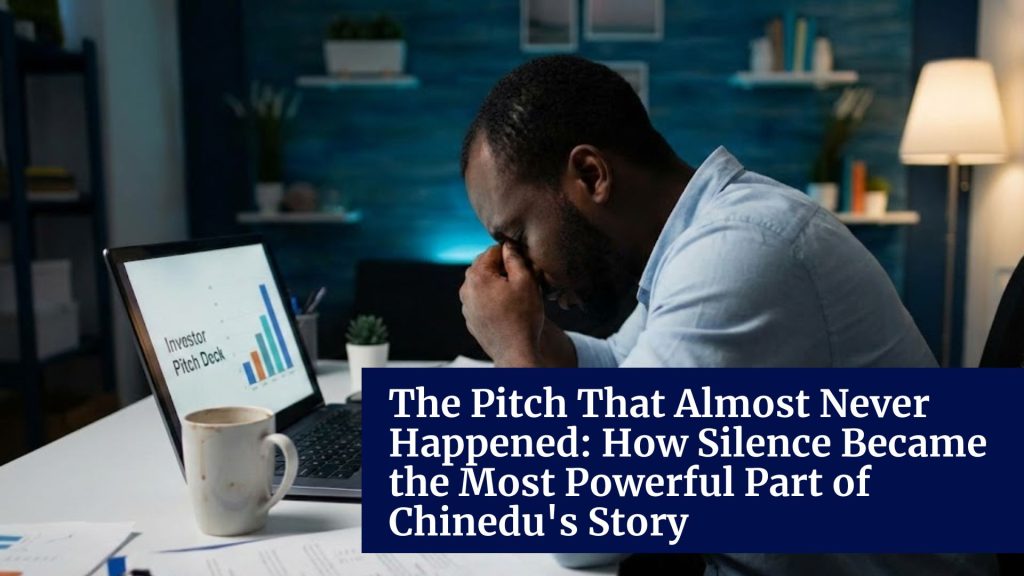
It was 2:17 a.m., and he’d been sitting in the same position for three hours—laptop open, pitch deck on screen, coffee cold beside him. His flight to Abuja was in five hours. The investor meeting that could save his startup was in nine.
And he still didn’t know what to say.
He’d been invited to pitch to one of West Africa’s most respected impact investors. This wasn’t a random opportunity—it was the opportunity. The kind founders pray for. The kind that changes trajectories.
But Chinedu felt stuck.

His deck was perfect. Eighteen slides. Every number verified. Market size? Check. Competitive analysis? Check. Five-year projections? All there.
He’d presented this deck seventeen times in the past six months.
It had earned him eleven versions of “We’ll circle back.”
The problem wasn’t the deck. Chinedu knew that now.
The problem was him. Or rather, what he was saying—and what he wasn’t.
That’s when his phone lit up. A WhatsApp message from Tunde, his co-founder:
“Bro, stop stressing. Just tell them about Mama Nkechi.”
Chinedu stared at the message.
Mama Nkechi.
He hadn’t thought about her in weeks. But suddenly, sitting there in the dark, exhausted and desperate, he remembered the exact moment everything started.
The Story He’d Been Running From
Two years ago, Chinedu wasn’t a “founder.”
He was just a guy trying to help his elderly neighbor figure out her pension payments.
Mama Nkechi lived three doors down from his parents’ house in Enugu. She’d worked as a primary school teacher for thirty-four years. Retired with full honors. Promised a modest pension that would keep her comfortable.
Except the money never came.
Not on time. Not consistently. Sometimes not at all.
Every month was the same nightmare: long queues at government offices, missing paperwork, officials who didn’t show up, systems that “weren’t working,” and always—always—the same answer: “Come back next week.”
Chinedu watched her make that trip eleven times in five months.
She was seventy-three years old.
One afternoon, she came back from another failed attempt, sat on her veranda, and cried. Not the loud kind of crying. The quiet, defeated kind. The kind that says: I did everything right, and it still wasn’t enough.
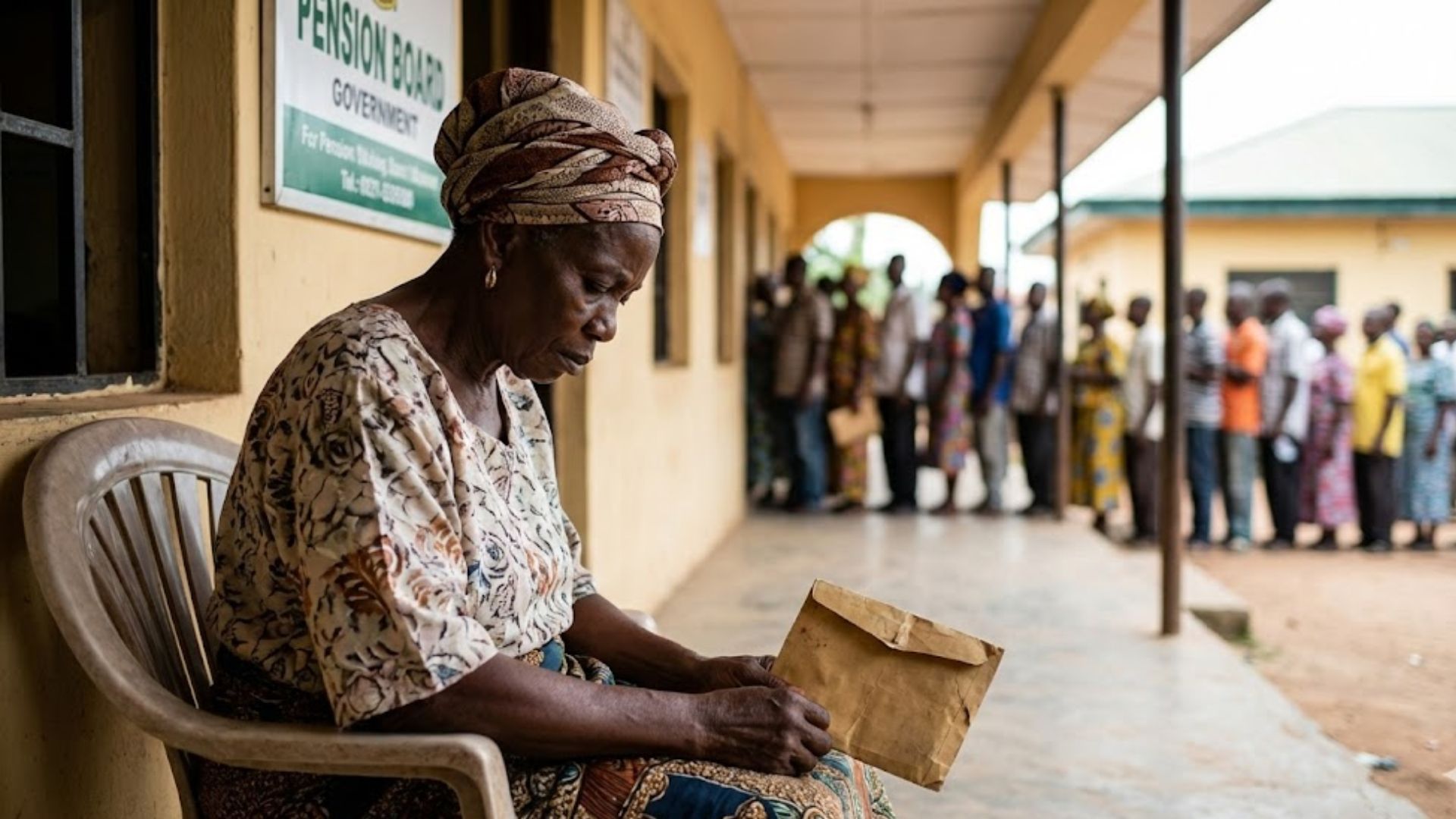
Chinedu sat with her. And in that silence, he realized something:
This wasn’t just Mama Nkechi’s problem.
This was thousands of retirees. Thousands of families. Thousands of people who had worked their entire lives and were now being asked to beg for what they’d already earned.
That night, Chinedu started building.
Not a “fintech platform.” Not a “pension optimization solution.” Not even a “startup.”
He built something so Mama Nkechi would never have to cry like that again.
The First Seventeen Pitches: What Went Wrong
But when Chinedu started pitching investors, he didn’t talk about Mama Nkechi.
He talked about “inefficiencies in legacy pension systems.”
He talked about “market gaps in the retiree financial services sector.”
He talked about “leveraging technology to streamline disbursement workflows.”
All true. All accurate.
All forgettable.
Investors would nod politely. Ask a few questions. Thank him for his time.
And then he’d never hear from them again.
By pitch seventeen, Chinedu was exhausted. Frustrated. Starting to wonder if maybe the problem was the business model. Maybe the market wasn’t ready. Maybe he should pivot.
That’s when Tunde told him the truth:
“You’re boring them to death. Tell them about Mama Nkechi.”
Chinedu resisted. “But that’s not professional. Investors want data, not sob stories.”
Tunde laughed. “Bro, you think investors don’t have grandmothers? You think they don’t know someone like Mama Nkechi? Tell. Them. The. Story.”
Pitch #18: The One That Changed Everything
Chinedu walked into that Abuja boardroom with a different opening slide.
No market size chart. No competitor matrix.
Just a photo.
Mama Nkechi, sitting on her veranda, holding a worn brown envelope with her pension documents.
The investor—a sharp woman in her fifties named Mrs. Adeyemi—leaned forward.
“Who is this?” she asked.
Chinedu took a breath.
“This is Mama Nkechi. She taught primary school in Enugu for thirty-four years. When she retired, the government promised her ₦47,000 a month. It took her eleven trips to a government office just to get her first payment. She’s seventy-three. And one day, she cried on her veranda because she was tired of fighting for what she’d already earned.”
Silence.
Then Mrs. Adeyemi said quietly: “My mother went through the same thing.”
Chinedu nodded. “That’s why we built this. Not to disrupt pensions. To make sure no one’s mother has to fight that fight again.”
For the next forty minutes, Chinedu didn’t just present slides.
He told a story.
He showed how Mama Nkechi’s struggle was replicated across 2.3 million retirees in Nigeria. He explained how the current system worked—and why it didn’t. He walked through the solution, not as “features,” but as relief.
“Imagine,” he said, “if Mama Nkechi could check her pension status from her phone. If she could get automated reminders. If she never had to stand in a queue again.”
Mrs. Adeyemi was taking notes.
When he got to the financials, he didn’t hide behind jargon. He was honest:
“We’re still early. We’ve helped 1,200 retirees so far. We’re charging ₦500 per verification. It costs us ₦290 to acquire each user, and we break even in forty-two days. It’s not perfect, but it’s working. And we’re learning fast.”
At the end, Mrs. Adeyemi asked one question:
“What do you need from us?”
Chinedu had rehearsed an answer about “capital deployment” and “scaling infrastructure.”
But what came out was simpler:
“We need help reaching the other 2.3 million people like Mama Nkechi. We can’t do that alone.”
Mrs. Adeyemi closed her notebook.
“Send me your full deck. I want my team to review this. I think we can work together.”

Three weeks later, Chinedu signed his first term sheet.
The Lesson: What Actually Happened in That Room
Chinedu didn’t win that pitch because he had better data than pitch #17.
He won because he finally told the truth about why the data mattered.
Here’s what changed:
1. He Started With a Person, Not a Problem Statement
Before: “The pension disbursement sector in Nigeria suffers from systemic inefficiencies affecting 2.3 million retirees.”
After: “This is Mama Nkechi. She’s seventy-three. And she cried because the system failed her.”
Humans connect with humans. Always.
2. He Showed Struggle Before Solution
Chinedu didn’t rush to his app. He let Mrs. Adeyemi feel the problem first. The eleven trips. The closed offices. The quiet tears.
Emotion opens wallets. Data closes deals.
3. He Positioned Himself as the Guide, Not the Hero
Chinedu stopped saying “We’re disrupting pensions” and started saying “We’re helping retirees get what they’ve earned.”
The hero of the story wasn’t the startup. It was Mama Nkechi—and every person like her.
4. He Painted Vision, Not Just Features
Instead of “automated verification workflows,” he said: “Imagine if no one’s mother had to stand in a queue again.”
Vision sticks. Features fade.
5. He Backed Story With Data—But Led With Story
The numbers were still there. Market size. Unit economics. Growth metrics.
But they came after the story. They supported the vision. They didn’t replace it.
The Framework: How to Structure Your Story-Led Pitch
If you’re preparing to pitch—whether to investors, donors, or partners—here’s the structure Chinedu used (and that we teach every client at Furst Spark):
Slide 1: The Person
Who is the human behind this problem? Show their face. Say their name. Make them real.
Slide 2: The Struggle
What pain are they experiencing? Don’t sanitize it. Let people feel it.
Slide 3: The Broader Truth
How many people share this struggle? Connect the personal to the universal.
Slide 4: The Solution (As Relief)
Present your product not as innovation, but as relief. What does life look like after your solution exists?
Slide 5: The Evidence
Now bring the data. Show traction. Prove it’s working. Be honest about what’s working and what’s not.
Slide 6: The Vision
Where could this go? How many more people could you help? Paint the future in human terms.
Slide 7: The Ask
What do you need to get there? Be specific. Be humble. Invite partnership, not just investment.
Before Your Next Pitch, Ask Yourself These 5 Questions
1. Whose story am I telling?
(If the answer is “my company’s,” start over. Tell a customer’s story.)
2. What’s the moment that made this personal?
(There’s always a moment. Find it. Start there.)
3. What’s at stake if this problem isn’t solved?
(Make them feel the cost of inaction.)
4. What does success look like—in human terms?
(Not revenue. Not users. Lives changed.)
5. Am I the hero or the guide?
(Hint: You’re always the guide. Your customer is the hero.)
The Truth Chinedu Learned (And You Need to Hear)
Story isn’t fluff.
It’s not the decoration on your pitch. It’s the foundation.
Because at the end of the day:
- Investors don’t fund platforms. They fund people solving problems they care about.
- Donors don’t give to programs. They give to missions they can see themselves in.
- Partners don’t sign contracts with features. They align with visions that resonate.
Your idea might be brilliant.
Your data might be flawless.
Your solution might be exactly what the market needs.
But if you can’t tell the story—the human story—of why it matters, no one will remember you long enough to say yes.
What Happens Next
If you’re reading this and thinking, “I need help telling my story”—you’re not alone.
Most founders and NGO leaders are incredible at doing the work. But telling the story? That’s a different skill.
Here’s how we can help:
🎯 Take Our Brand Archetype Quiz (Free)
Discover your brand’s unique personality and how to communicate authentically.
Start the quiz here →
📞 Book a Story Strategy Call
We’ll help you find the story buried in your pitch—and show you how to lead with it.
Schedule your call →
📥 Download the Story-Led Pitch Template
Get the exact 7-slide framework Chinedu used to turn rejection into funding.
Download now →
The Bottom Line
Chinedu’s first seventeen pitches failed because he told investors what he built.
His eighteenth pitch succeeded because he told them why it mattered.
Same platform.
Same data.
Same founder.
Different story.
Your idea deserves funding.
Your mission deserves support.
Your vision deserves partners who believe.
But first?
It deserves a story worth telling.
What’s YOUR Mama Nkechi story? Drop it in the comments. We’d love to hear it.
And if you know a founder or NGO leader who needs to read this—share it with them. Let’s make sure their next pitch isn’t #17. Let’s make it #18.